
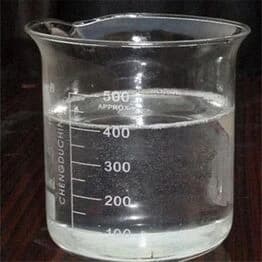
HEDP
- IUPAC Name
- (1-hydroxyethane-1,1-diyl)diphosphonic acid
- Molecular Formula
- C2H8O7P2
- Molecular Weight (g/mol)
- 206.0300
- Synonyms & Trade Names
- HEDP; Etidronic acid; 1-Hydroxyethylidene-1,1-diphosphonic acid
- Purity / Assay (%)
- 60% solution min
- Grade / Quality Level
- Technical Grade
Categories
Technical Document
Brief Overview
HEDP is an odorless, colorless to yellowish water-soluble liquid with the properties of a chelating agent. The finished product is produced as a technical grade and has a long shelf life. Compared with other chelating agents, HEDP has multiple phosphonate (acid) groups and is very stable at high temperatures (greater than 1300 ºF) and acid concentrations; it resists oxidation by chlorine. The stability of the molecule is due to the C–P chemical bond in HEDP. In addition, HEDP is considered safe.
Manufacturing Process
There are two commercial methods for manufacturing HEDP. The first and more common is to react phosphorus trichloride with acetic anhydride in water. Phosphorus trichloride is converted to phosphoric acid in the reaction vessel (in situ) and then reacted with acetic anhydride. Two by-products, hydrochloric acid (HCl) and acetic acid, are produced and can be sold on the market. The balance equation is:
2 PCl3 + (CH3CO)2O + 6 H2O → C(CH3)(OH)(PO3H2)2 + CH3COOH + 6 HCl
The second method is a one-step version of the first process. Phosphorus acid anhydrous is reacted directly with acetic anhydride. As with the reaction starting with PCl3, the reaction is carried out at high temperature for at least 10 to 12 hours. The balanced equation is:
2 H3PO3 + (CH3CO)2O → C(CH3)(OH)(PO3H2)2 + CH3COOH

